Orbyt Dating
UI Concept (2023)
A design concept for a dating app that puts you in control of your own algorithm, without the dopamine loop.
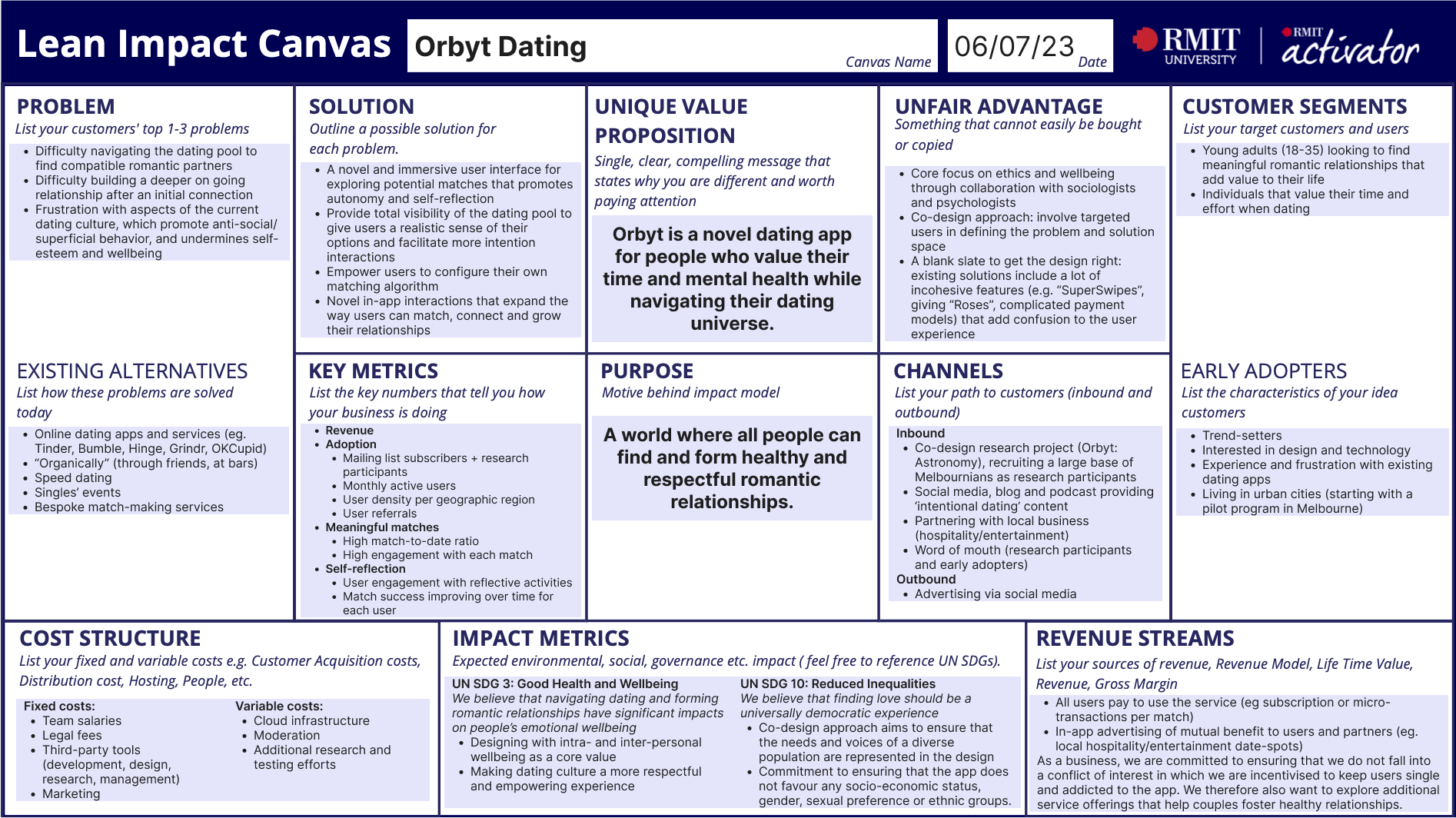
Started as a personal project (motivated largely by my own frustrating experiences with dating apps), developed with my friends Max Plumley and India Reed through RMIT Activator's FounderHUB program, where we won best pitch. We eventually realised none of us actually wanted to run a dating app, so this lives on as speculative UI for what a better one might look like.
Research
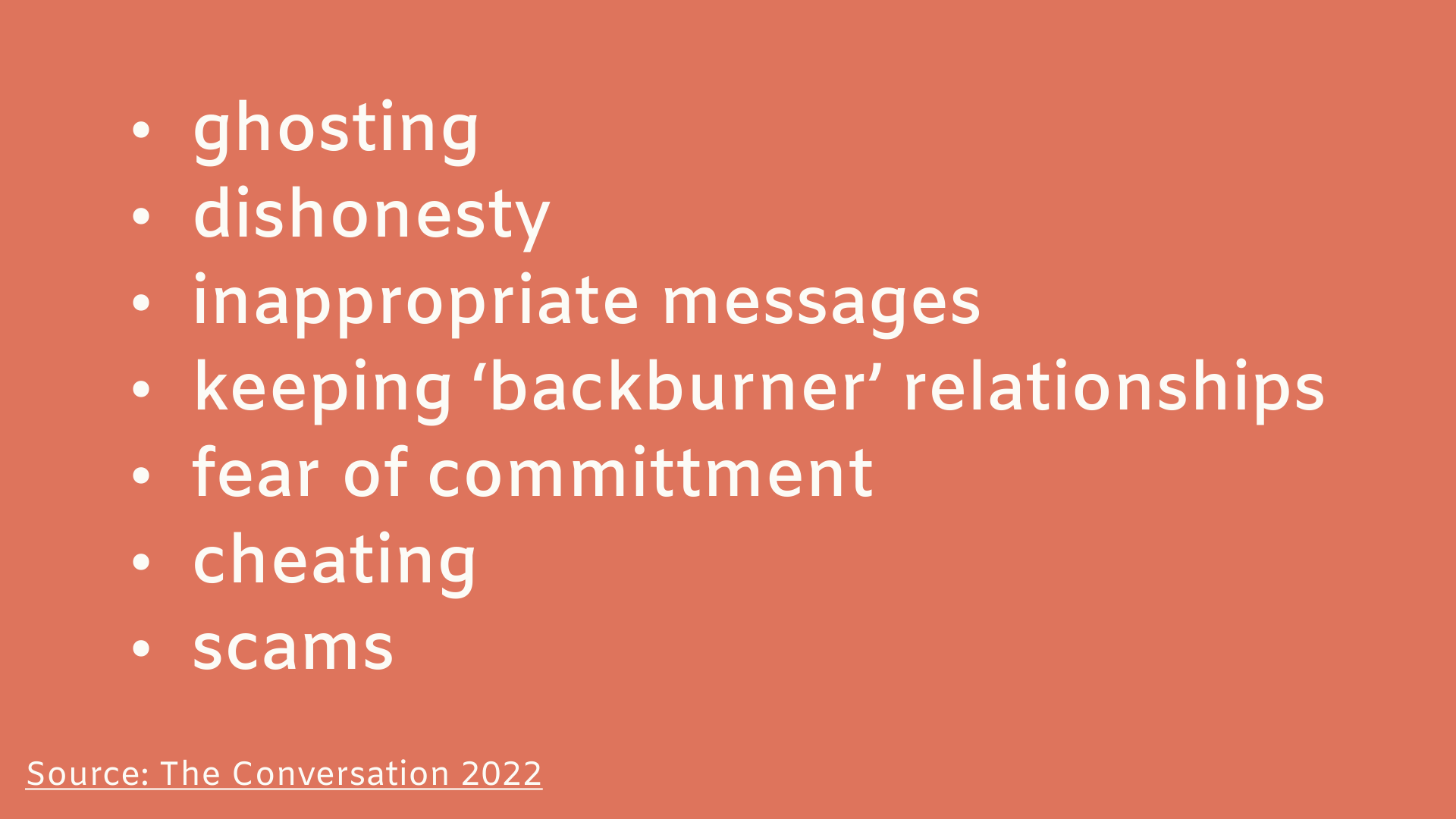
I ran interviews with over twenty Melbourne friends and friends-of-friends. What came up, repeatedly: swipe fatigue, opaque algorithms, self-esteem tied to match counts, long lists of people you matched with and never spoke to. The feeling of seeing the same faces cycling through forever. Frustration at apps crudely retrofitting monetisation onto experiences that used to feel more human. People were willing to pay for something good; they just wanted transparency. And especially women wanted better safety tools and a culture of basic respect.
The Concept
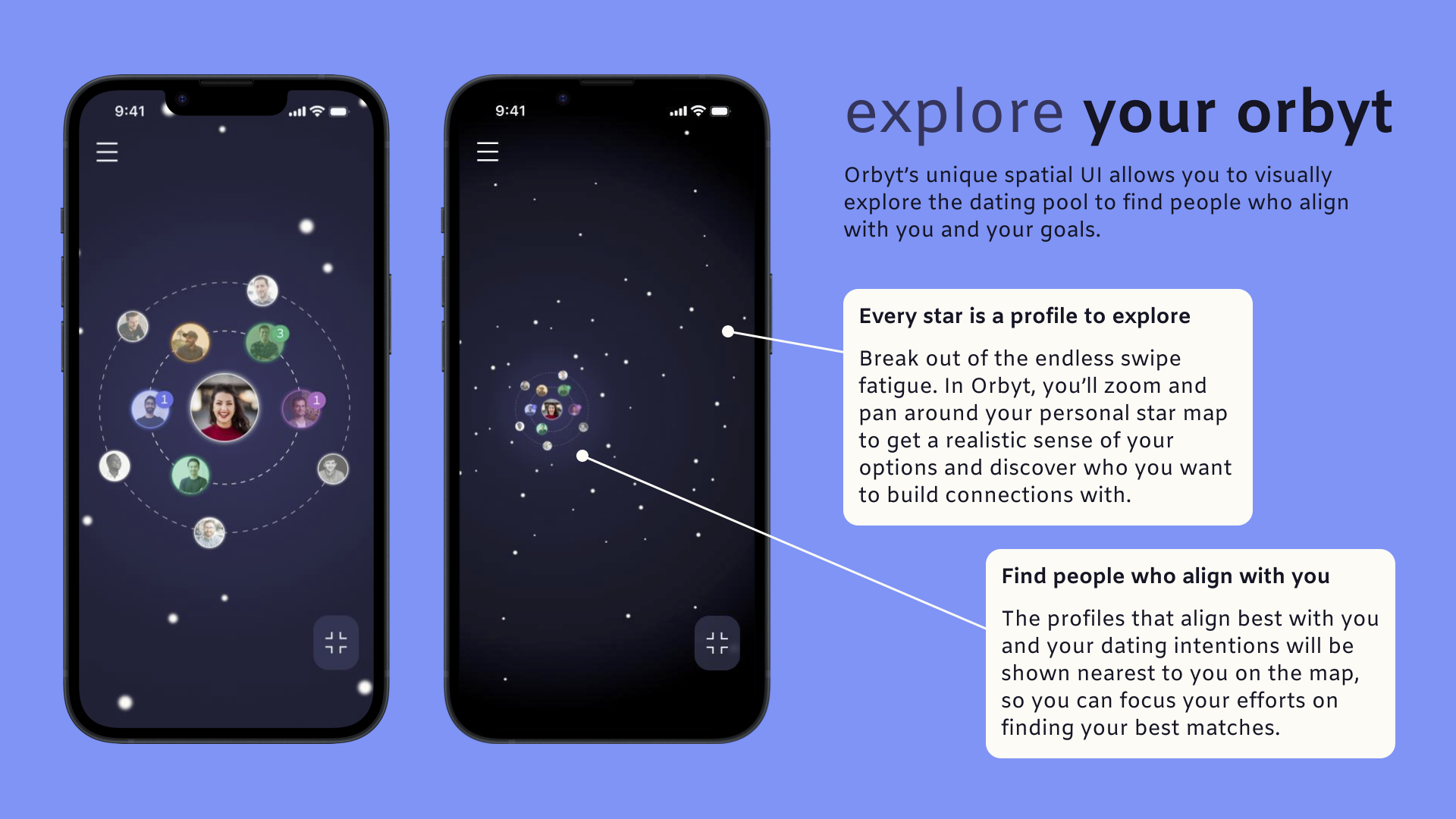
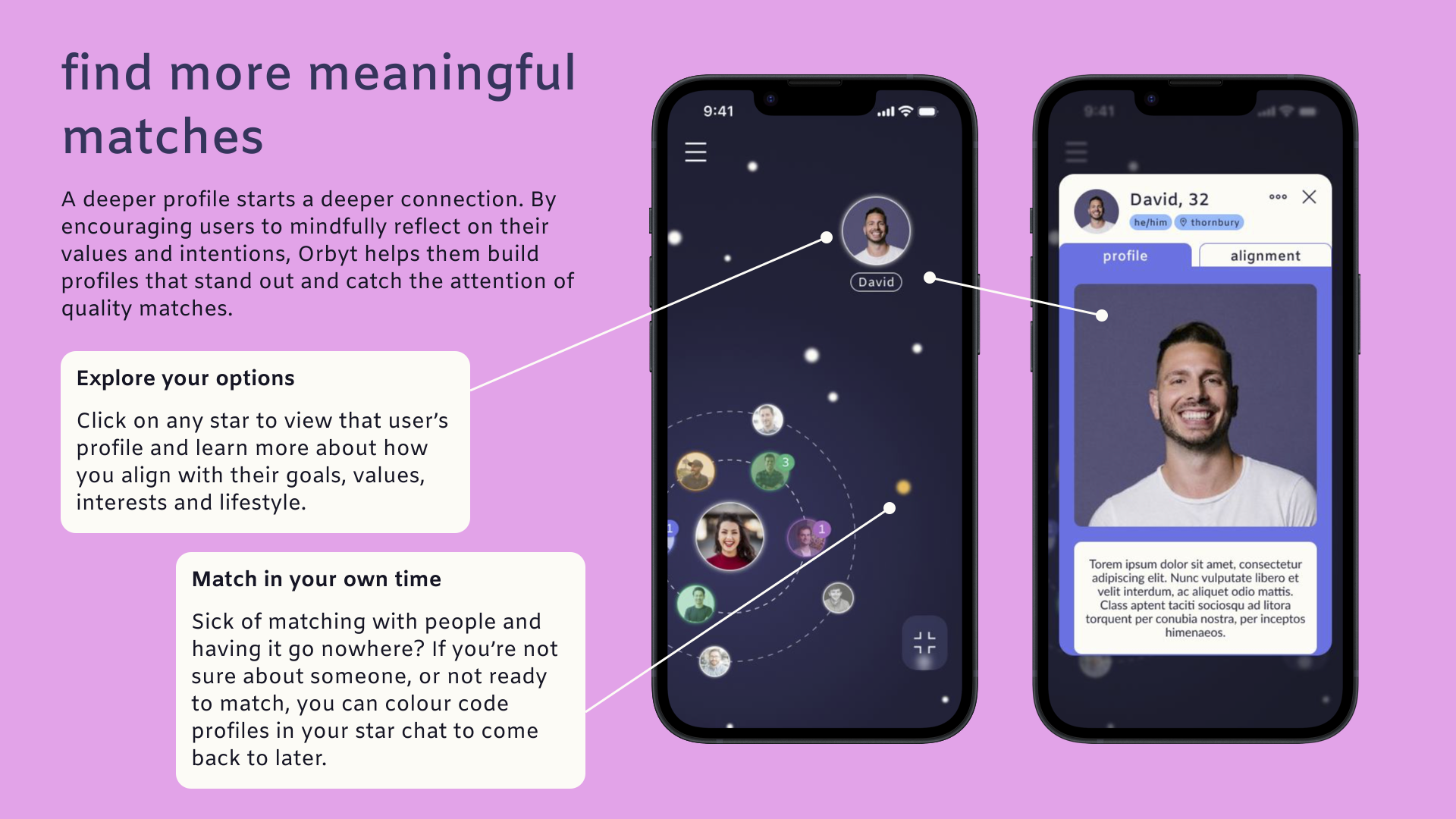
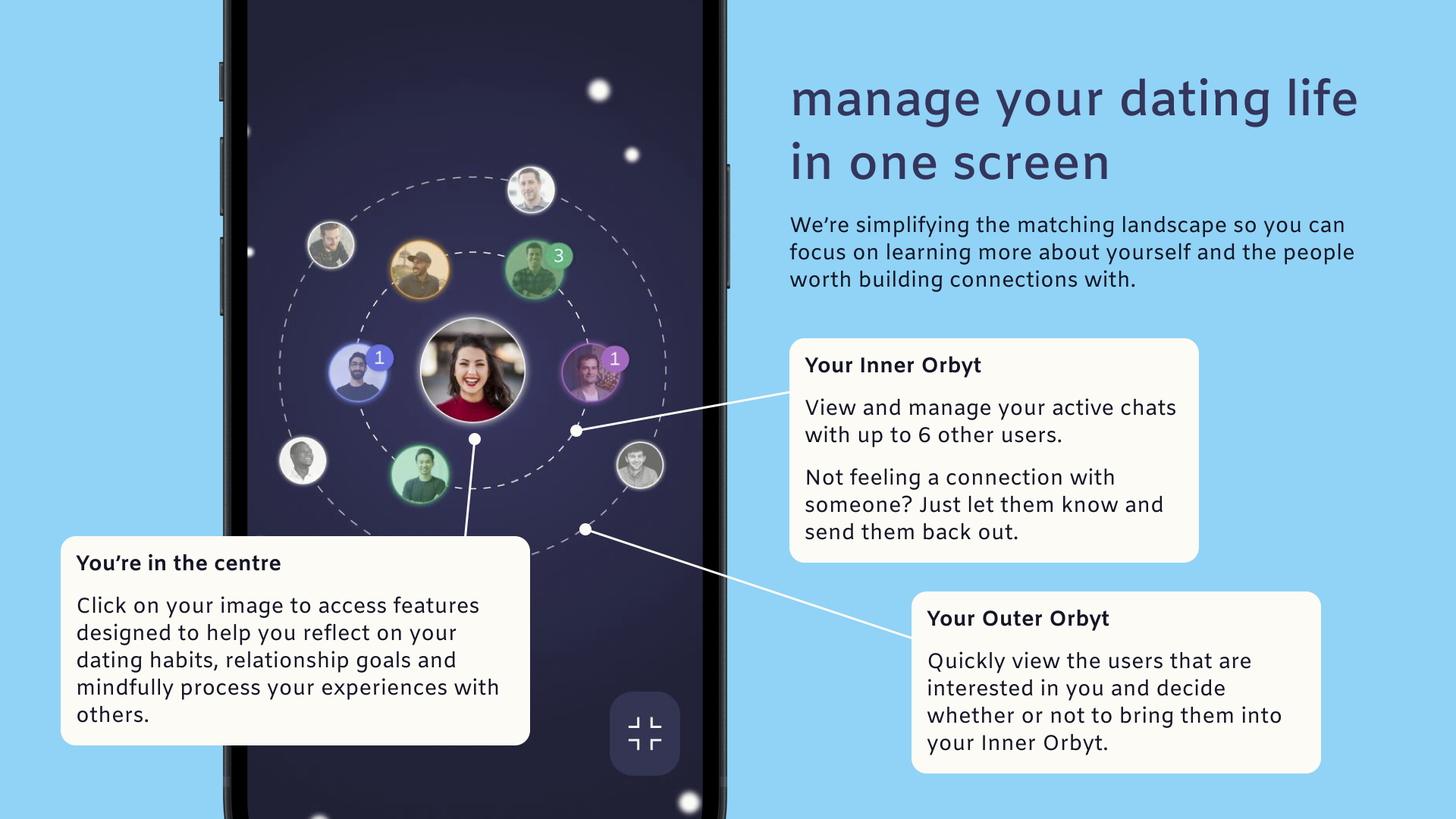
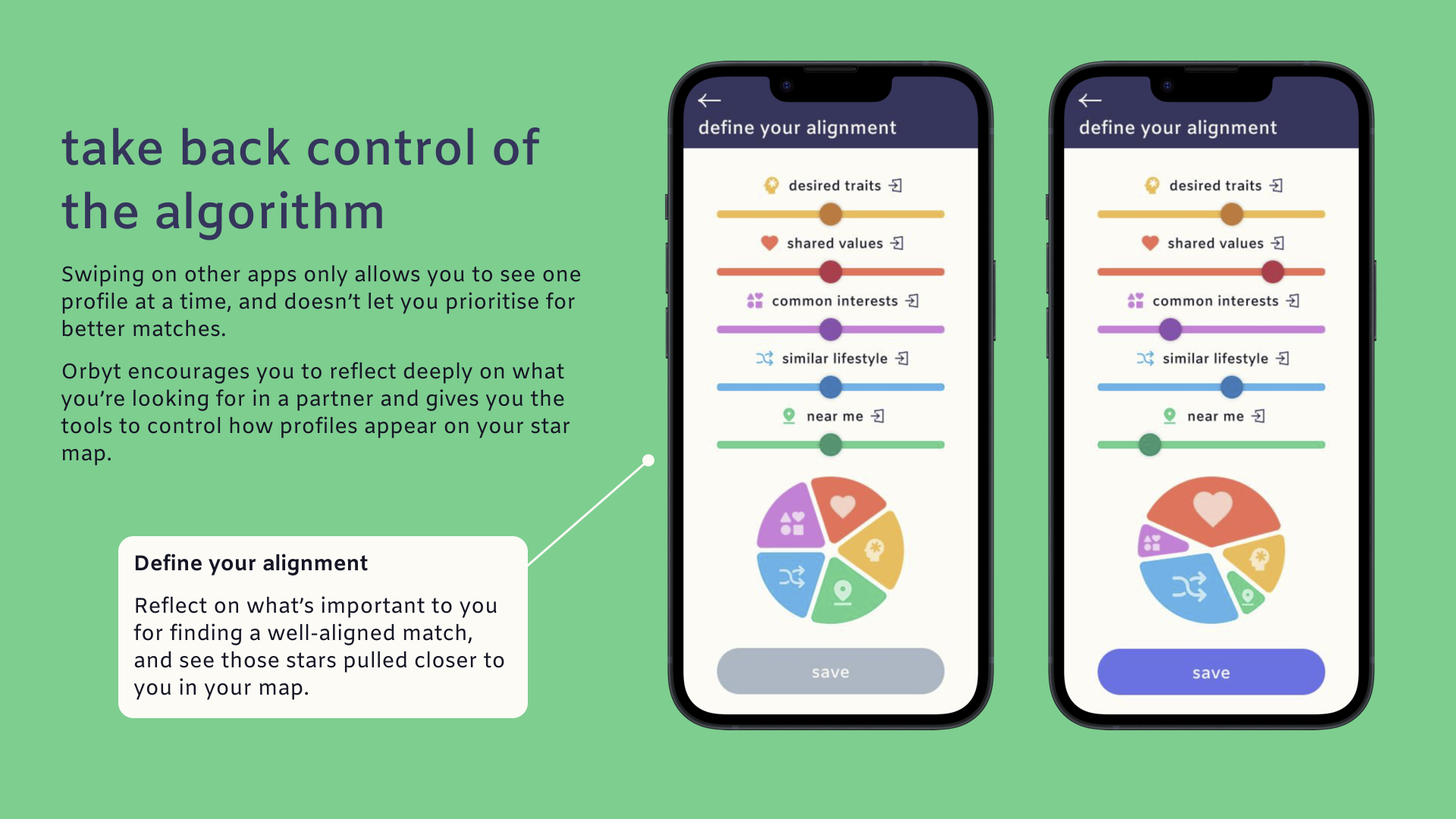
Each user sits at the centre of their own star map, a zoom/pan canvas that feels more spatial and exploratory than a deck of cards to swipe through. You have an inner and outer orbyt for keeping track of who you're actively talking to versus who's on your radar, and they fill up, which forces a decision: actually talk to this person, or unmatch and move on. No more endless lists of people you matched with once and quietly forgot about. And you control your own algorithm: you can see and adjust the signals that attract matches toward you, rather than having the app make those decisions invisibly.
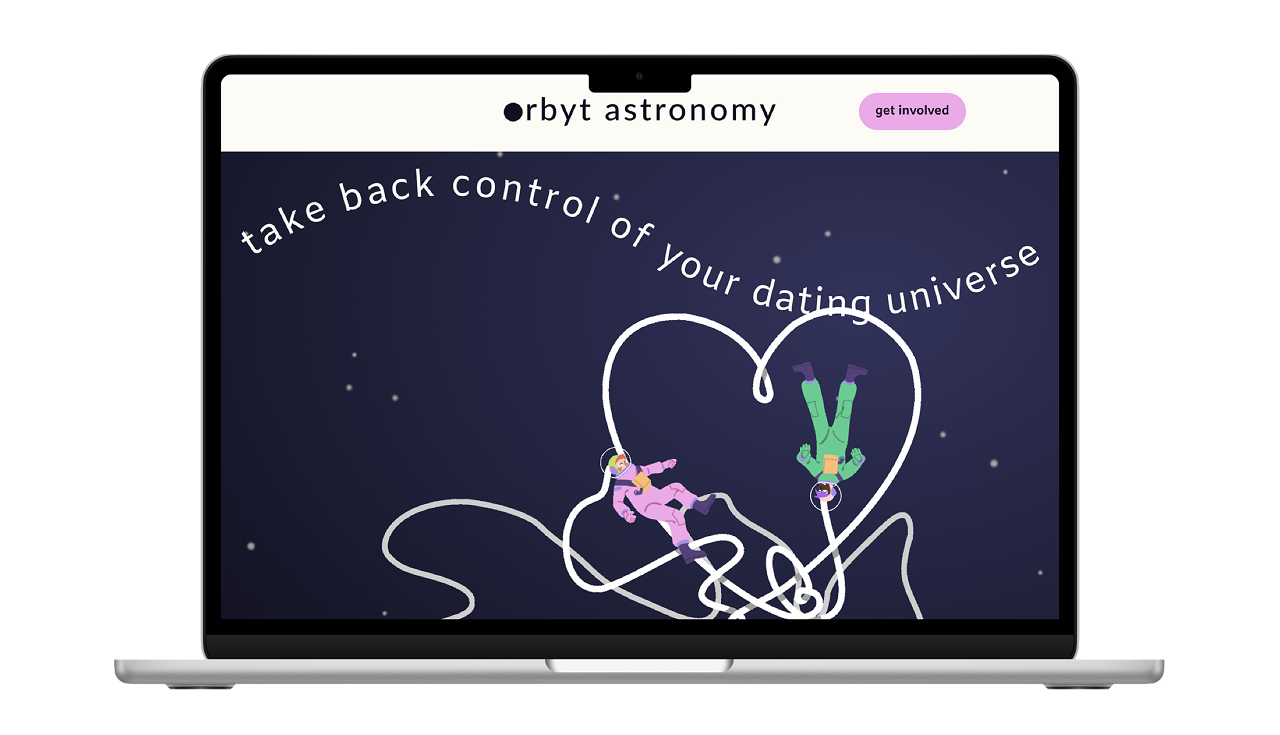
The goal was to make dating feel more like discovery: curious, intentional, a bit more like navigating a finite universe and less like scrolling an infinite feed.
I did the research, UI design, and branding. Max handled engineering and illustration; India led business and marketing development. The bits I'm most proud of are the star map interaction itself, the spatial canvas patterns, the gentle animations, and the mental model, which turned out to be surprisingly simple once you just showed someone the map.
What We Learned
Building community adoption from scratch is a very particular kind of hard. Good thing to find out early. In my personal practice, I'm now more drawn now to building standalone tools - things that work for one person without needing a network to function.